14:23 – Jeroboam II – son of Jehoash (or Joash). He reigned for 41 years (793-753 BC) over Israel though approximately 11 years were spent as co-regent with his father Jehoash) and did evil in the LORD’s sight (14:24) by continuing in the sin of Jeroboam son of Nebat.
14:25 – Jonah son of Amittai of Gath-Hepher (see Jonah 1:1) prophesies by the word of the LORD and Jeroboam II is therefore able to retake the boundary promised in Numbers – Lebo Hamath to the Arabah (Num.34:7-8 ; though see where the judgment comes from according to Amos 6:14). Why does the LORD care to bless Israel? (see 2 Kings 14:26-27)
14:26 – What was it that Israel “was suffering” so “bitterly” from? The problem appears to be not so much concerned with those outside of Israel as her antagonists, but those within Israel. Paul House (NAC pgs. 326-327) lists Israel as full of spiritual adulterers (Hos. 1:2; 4:1), thieves (Hos. 4:2), ungrateful children (Hos. 11:1-7), those who offer sacrifices instead of mercy (Hos. 6:6), those who worship idols instead of the LORD alone (Hos. 13:4), the oppression of the poor (Amos 2:6), injustice (Amos 2:7), immorality (Amos 2:7-8), love of wealth more than kindness (Amos 4:1-3), easy living more than righteous character (6:1-7). (For Judah’s sins and judgment see Isaiah 1-6)
15:1 – Azariah (also called Uzziah – see Isaiah 1:1; 6:1; Amos 1:1; 2 Chron. 26-27) – son of Amaziah. He reigned for 52 years (792-740 BC) over Judah and did what was right in the LORD’s sight, but he never removed the high places or stopped the people from making sacrifices there (15:4). He led Judah to victory by raising a great military and defeating the Philistines and the Ammonites and he rebuilt the wall of Jerusalem that had been torn down as well as building up several cities and towers (2 Chron. 26:6-15). After these great deeds he sinned against the LORD by entering the Temple and in his arrogance he offered incense. Thus the LORD gave him leprosy for the remainder of his reign and he was forced to share his throne since he had to live outside of the normal kingly precinct (15:5; the details are given in 2 Chron. 26:16-20).
15:8 – Zechariah – son of Jeroboam II. He reigned for 6 months (753-752 BC) over Israel and did evil in the LORD’s sight continuing in the sin of Jeroboam (15:9). He was assassinated by Shallum (15:13) and thus the word of the LORD was fulfilled concerning Jehu’s lineage on the throne lasting only four generations (10:30; 15:12).
15:13 – Shallum – son of Jabesh (probably a reference to the city of Jabesh Gilead – see Konkel NIVAC 549). He reigned for 1 month (752 BC) over Israel and was assassinated by Menahem. He doesn’t even receive recognition for being evil or right in the LORD’s sight.
15:17 – Menahem – son of Gadi (probably a reference to his being from the tribe of Gad – see Konkel NIVAC 549). He reigned for 10 years (752-742 BC) over Israel (though it may be assumed that he ruled only part of Israel and was competing with Pekah for kingship of Israel – see dates below) and did evil in the LORD’s sight continuing in the sin of Jeroboam (15:18). He is ignominiously is noted to have been the only Israelite king who “ripped open all the pregnant women” of a conquered city (Tiphsah by the Euphrates – MT; or more likely Tappuah about 10 miles from Tirzah – Old Greek), which was actually a city of Israel in apparent rebellion against him (15:16 – see the judgment of the Amonnites for doing the same in Amos 1:13). He also buys off an alliance (and retreat?) with Tiglath-Pileser III (called “Pul” in honor of conquering Babylon in 729 BC) of Assyria. He taxed the “mighty men” of Israel to raise the funds to buy off Assyria (15:19-20).
15:23 – Pekahiah – son of Menahem. He reigned for 2 years (742-740 BC) over Israel and did evil in the LORD’s sight continuing in the sin of Jeroboam. He was assassinated by Pekah and (other?) Gileadites (15:25).
15:25 – Pekah – son of Remaliah. He reigned for 20 years (752-732 BC) over Israel and did evil in the LORD’s sight continuing in the sin of Jeroboam (15:28). He allied with Rezin king of Aram/Syria against Tiglath Pileser III of Assyria and tried to ‘pursuade’ Jotham king of Judah according to the will of the LORD (15:37). He was assassinated by Hoshea after losing in battle to Assyria where many in Israel were carried away into captivity (15:29-30; by the word of the LORD prophesied to Amaziah – Amos 7:17).
15:32 – Jotham – son of Uzziah (or Azariah). He reigned for 16 years (750-734 BC) over Judah and did what was right in the LORD’s sight, but… (15:37; contrast the positive view in 2 Chron. 27:6). He defeated the Ammonites and exacted great wealth from them (2 Chron.27:5). He built up one of the gates of the Temple as well as the wall of Ophel and several cities and forts and towers (15:35; 2 Chron. 17:3-4). He became mighty because he sought the LORD (2 Chron. 27:6).
Prophetic Messages delivered at this time: ISRAEL – Jonah, Amos and Hosea; JUDAH – Isaiah and Micah.
Showing posts with label Judah. Show all posts
Showing posts with label Judah. Show all posts
Wednesday, October 21, 2009


Thursday, October 08, 2009
2 Kings 13-14:22 – “Grace for Israel and Judah?”
(Here is the first of a few personal comments and questions from my Wednesday night Bible study -- working through 2 Kings right now -- let me know what you think)
13:1 – Jehoahaz – the son of Jehu. He reigned for 17 years (814-798 BC) as the king of Israel and did evil in the LORD’s sight (13:2). His father, Jehu, had been promised by the prophet Elisha that final judgment would not fall on his family for four generations (2 Ki.10:30; see also Deut.6:10-12). However, because of idolatry Israel was defeated by the Aramaens and Israel’s army reduced to 50 charioteers, 10 chariots and 10,000 foot soldiers (2 Ki.13:6-7).
13:3-4 – Judgment brings blessing? What was the purpose of the chastisement that Israel suffered at the hands of the Aramaens?
13:4 – Who might this unnamed “deliverer” be? Paul House (NAC 308 – he also mentions Hobbs and Gray as holding this position) and Gus Konkel (NIVAC 525) propose this “deliverer” was Elisha. The reasons given are that Elisha is named in the immediate context in language reminiscent of the “new” Moses (Deut.26:5-9) who would be another “deliverer” for Israel; further he is called the “chariots and horses of Israel” (2 Ki.13:14); finally, Elisha is portrayed in Kings as being a deliverer of Israel (2 Ki.3; 6:8-23).
13:6 – “…but they continued to sin…” – What were their sins? The religion of Jeroboam and the Asherah pole (see Amos 4:6-12).
13:10 – Jehoash – the son of Jehoahaz. He reigned for 16 years (798-782 BC) as king of Israel and did evil in the LORD’s sight (13:11). He defeated and captured king Amaziah of Judah and conquered Jerusalem: looting the treasuries of the Temple and palace, and carrying away many of the inhabitants into exile in Samaria (2 Ki.13:11-14). He also made an alliance with Assyria in order to try to oppose Aram.
![]() 13:14 – Why is Elisha called the “chariots and horses of Israel”?(see 2 Ki.3; 6:8-7:20; and also concerning Elijah: 2 Ki.2:12). He was here called this name on his deathbed after having anointed Jehu king of Israel nearly 40 years prior (2 Ki.9:1-3). Even the servants of the LORD may suffer illness that leads to death. There is no guarantee with the LORD other than that He is ever faithful. We are called to look to Him and entrust ourselves in faith and obedience to His work and will. The outcome of our life is not determined by our manner of suffering, or of death. The outcome of our life is determined by the LORD Himself.
13:14 – Why is Elisha called the “chariots and horses of Israel”?(see 2 Ki.3; 6:8-7:20; and also concerning Elijah: 2 Ki.2:12). He was here called this name on his deathbed after having anointed Jehu king of Israel nearly 40 years prior (2 Ki.9:1-3). Even the servants of the LORD may suffer illness that leads to death. There is no guarantee with the LORD other than that He is ever faithful. We are called to look to Him and entrust ourselves in faith and obedience to His work and will. The outcome of our life is not determined by our manner of suffering, or of death. The outcome of our life is determined by the LORD Himself.
13:23 – What do “grace” and “compassion” have to do with the LORD’s
“covenant” with Israel?
14:1-4 – Amaziah – son of Joash. He reigned for 29 years (796-767 BC) as the king of Judah and did what was pleasing in the LORD’s sight, but not like David and “not wholeheartedly” (2 Ki.14:4; 2 Chron.25:2). Though he received mention as fulfilling the Law of retribution in accordance with judging only those who sin (see Deut.24:16). However, he did not destroy the “high places” (Deut.16:1-8; 16:21-22), while he maintained the worship of the LORD at Jerusalem. In a campaign against Edom, he initially hired mercenaries from Israel, but by a message from one of the prophets concerning failure if the Israelites were with them, he summarily dismissed them (2 Chron.25:6-10). The dismissed Israelites then raided border towns of Judah which led to Amaziah’s challenge to Israel on the battlefield (2 Chron.25:20). This was the doing of the LORD because after Amaziah’s victory over Edom (10,000 were killed) he took Edom’s idols and established worship of them, therefore the LORD determined to judge him (2 Chron.25:20). He lost the battle against Israel and was utterly defeated at the hands of Jehoash king of Israel. Amaziah was captured, Jerusalem’s northern wall was torn down, and the city was plundered of both wealth and people (2 Ki.14:11-14; 2 Chron.25:22-24). King Amaziah lived another 15 years after the death of Jehoash king of Israel, but he never regained the confidence of his people and eventually was forced to flee to Lachish where he was hunted down and assassinated (2 Ki.14:17-19; 2 Chron.25:25-27).
14:8 – Why did Amaziah king of Judah challenge Jehoash king of Israel to
battle? (see 2 Chron.25:7-13)
14:11-14 – Why was Judah defeated? (see 2 Chron.25:20) Sin may have led to the defeat, but what is the aim of the LORD in bringing about the defeat?
13:1 – Jehoahaz – the son of Jehu. He reigned for 17 years (814-798 BC) as the king of Israel and did evil in the LORD’s sight (13:2). His father, Jehu, had been promised by the prophet Elisha that final judgment would not fall on his family for four generations (2 Ki.10:30; see also Deut.6:10-12). However, because of idolatry Israel was defeated by the Aramaens and Israel’s army reduced to 50 charioteers, 10 chariots and 10,000 foot soldiers (2 Ki.13:6-7).
13:3-4 – Judgment brings blessing? What was the purpose of the chastisement that Israel suffered at the hands of the Aramaens?
13:4 – Who might this unnamed “deliverer” be? Paul House (NAC 308 – he also mentions Hobbs and Gray as holding this position) and Gus Konkel (NIVAC 525) propose this “deliverer” was Elisha. The reasons given are that Elisha is named in the immediate context in language reminiscent of the “new” Moses (Deut.26:5-9) who would be another “deliverer” for Israel; further he is called the “chariots and horses of Israel” (2 Ki.13:14); finally, Elisha is portrayed in Kings as being a deliverer of Israel (2 Ki.3; 6:8-23).
13:6 – “…but they continued to sin…” – What were their sins? The religion of Jeroboam and the Asherah pole (see Amos 4:6-12).
13:10 – Jehoash – the son of Jehoahaz. He reigned for 16 years (798-782 BC) as king of Israel and did evil in the LORD’s sight (13:11). He defeated and captured king Amaziah of Judah and conquered Jerusalem: looting the treasuries of the Temple and palace, and carrying away many of the inhabitants into exile in Samaria (2 Ki.13:11-14). He also made an alliance with Assyria in order to try to oppose Aram.
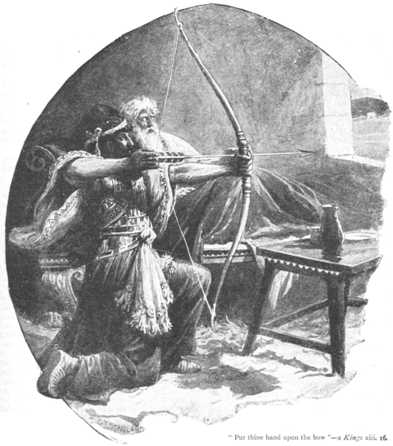 13:14 – Why is Elisha called the “chariots and horses of Israel”?(see 2 Ki.3; 6:8-7:20; and also concerning Elijah: 2 Ki.2:12). He was here called this name on his deathbed after having anointed Jehu king of Israel nearly 40 years prior (2 Ki.9:1-3). Even the servants of the LORD may suffer illness that leads to death. There is no guarantee with the LORD other than that He is ever faithful. We are called to look to Him and entrust ourselves in faith and obedience to His work and will. The outcome of our life is not determined by our manner of suffering, or of death. The outcome of our life is determined by the LORD Himself.
13:17-19 – What is the point of shooting the arrow and striking the arrows on the ground? (see 2 Ki.13:25)
13:21 – A miracle story is told of a “chance” throwing of a body into the grave of Elisha which results in the dead man being resurrected. Paul House notes the living miracles associated with the passing of Elijah and Elisha by saying, “Elijah has gone to heaven without dying; Elisha has kept giving Israel life after he has died” (NAC 308). How much more is our LORD capable of giving life if one of His prophets could be used to give life?
13:23 – What do “grace” and “compassion” have to do with the LORD’s
“covenant” with Israel?
14:1-4 – Amaziah – son of Joash. He reigned for 29 years (796-767 BC) as the king of Judah and did what was pleasing in the LORD’s sight, but not like David and “not wholeheartedly” (2 Ki.14:4; 2 Chron.25:2). Though he received mention as fulfilling the Law of retribution in accordance with judging only those who sin (see Deut.24:16). However, he did not destroy the “high places” (Deut.16:1-8; 16:21-22), while he maintained the worship of the LORD at Jerusalem. In a campaign against Edom, he initially hired mercenaries from Israel, but by a message from one of the prophets concerning failure if the Israelites were with them, he summarily dismissed them (2 Chron.25:6-10). The dismissed Israelites then raided border towns of Judah which led to Amaziah’s challenge to Israel on the battlefield (2 Chron.25:20). This was the doing of the LORD because after Amaziah’s victory over Edom (10,000 were killed) he took Edom’s idols and established worship of them, therefore the LORD determined to judge him (2 Chron.25:20). He lost the battle against Israel and was utterly defeated at the hands of Jehoash king of Israel. Amaziah was captured, Jerusalem’s northern wall was torn down, and the city was plundered of both wealth and people (2 Ki.14:11-14; 2 Chron.25:22-24). King Amaziah lived another 15 years after the death of Jehoash king of Israel, but he never regained the confidence of his people and eventually was forced to flee to Lachish where he was hunted down and assassinated (2 Ki.14:17-19; 2 Chron.25:25-27).
14:8 – Why did Amaziah king of Judah challenge Jehoash king of Israel to
battle? (see 2 Chron.25:7-13)
14:11-14 – Why was Judah defeated? (see 2 Chron.25:20) Sin may have led to the defeat, but what is the aim of the LORD in bringing about the defeat?
Subscribe to:
Posts (Atom)